
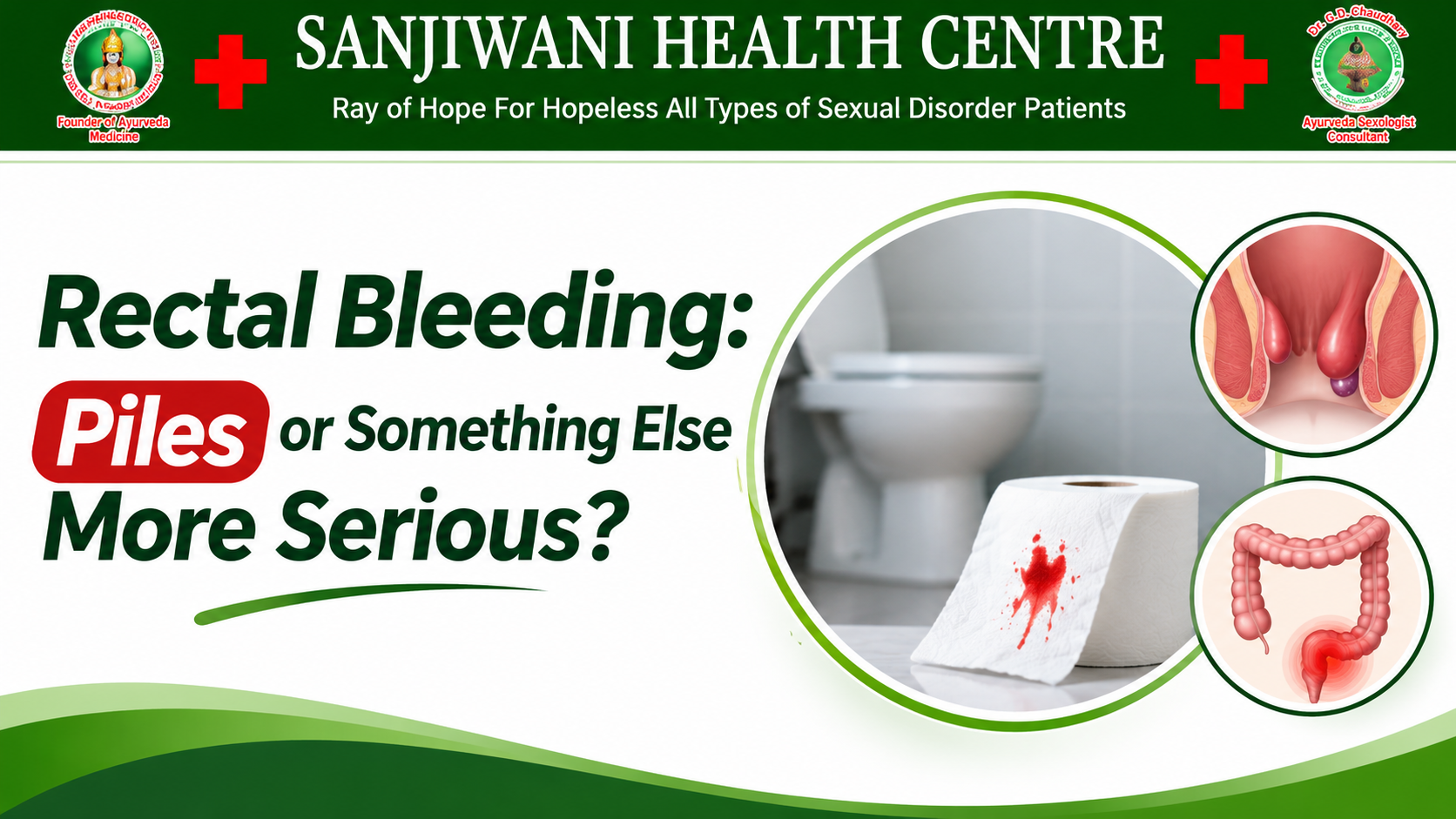

Rectal bleeding is common and can be due to an anal fissure or piles, especially if it’s just blood on the toilet paper. But blood mixed in the stool, bleeding after 45, dark blood, weight loss or a change in bowel habits can be a sign of bowel disease, polyps or rectal cancer and may require a proctologist and a colonoscopy. Seeing blood when you wipe or in the toilet bowl can be scary, and most people think it’s cancer, but the reassuring truth is that rectal bleeding, mostly in younger adults, comes from an anal fissure or piles. The less reassuring truth is that you are not able to tell the cause by looking, and some bleeding is a sign of something that needs early treatment.
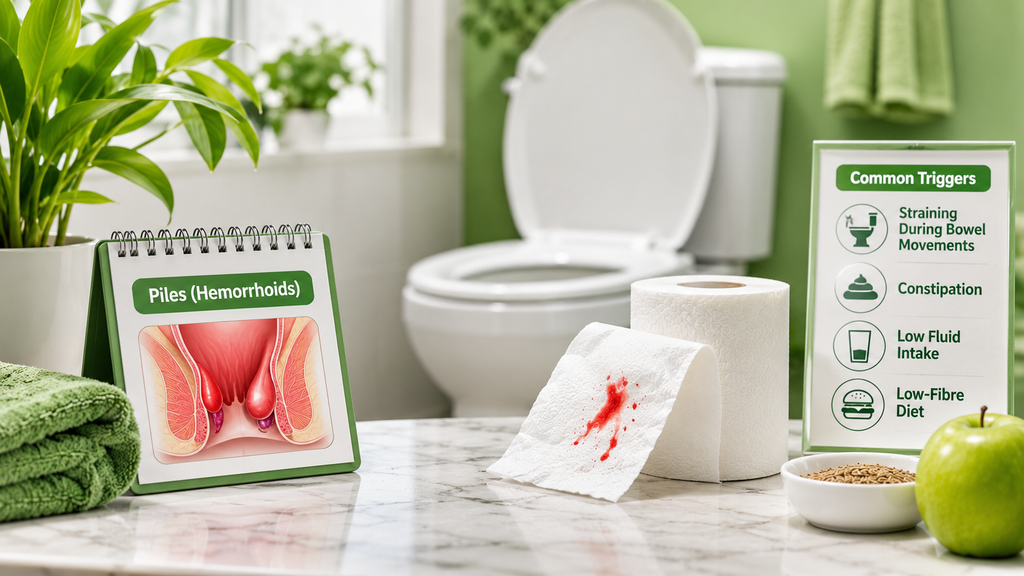
What is rectal bleeding?
Rectal bleeding means blood from the back passage: drops in the bowl, smear on toilet paper, streaks on stool, dark or black stools and blood mixed through loose motions. Doctors call it PR bleeding; some people call it anal bleeding or blood in stool. The amount is not a reliable indicator of seriousness. The blood from piles can be harmless, while blood mixed with stool can be an early symptom of a tumour. Colour, pattern and other symptoms matter more than quantity.
Common causes of rectal bleeding
- Piles
Piles are swollen blood vessels around or in blood vessels and can be worsened by constipation, straining, pregnancy and long sessions on the toilet. They typically bleed painlessly and are bright red at the end of a bowel movement, sometimes with a lump or itching. Many settle with more fibre, less straining, and more water that persist have effective treatment options, including laser procedures.
- Anal fissure
It is a small tear in anus lining, often after a hard stool. The giveaway with bleeding from an anal fissure is sharp, cutting pain during or after bowel movement with blood on toilet paper. Most heal with warm sitz baths, softer stools or prescribed creams. A fissure that keeps re-opening is called chronic and may need minor procedures such as fissure surgery.
- Inflammatory bowel disease
Crohn’s disease and ulcerative colitis inflame the bowel lining and can cause diarrhoea, cramps, mucus and urgency with weight loss or tiredness. They are long-term conditions which are managed by gastroenterologists.
When rectal bleeding becomes serious
Rectal cancer can develop in the last part of the large bowel just before the anus. It develops slowly from small polyps that change over the years. The symptoms of early rectal cancer are easy to put down to piles or changes in diet, so persistent bleeding can never be self-diagnosed.
The symptoms that raise concern are:
- Blood mixed in stool, dark blood spots on toilet paper
- Change in bowel habits
- Feeling that the bowel is not completely empty
- Mucus in stool or stool getting narrower than usual
- Pain in lower abdomen or back passage
- Unexpected weight loss
Consult with specialists without any delay
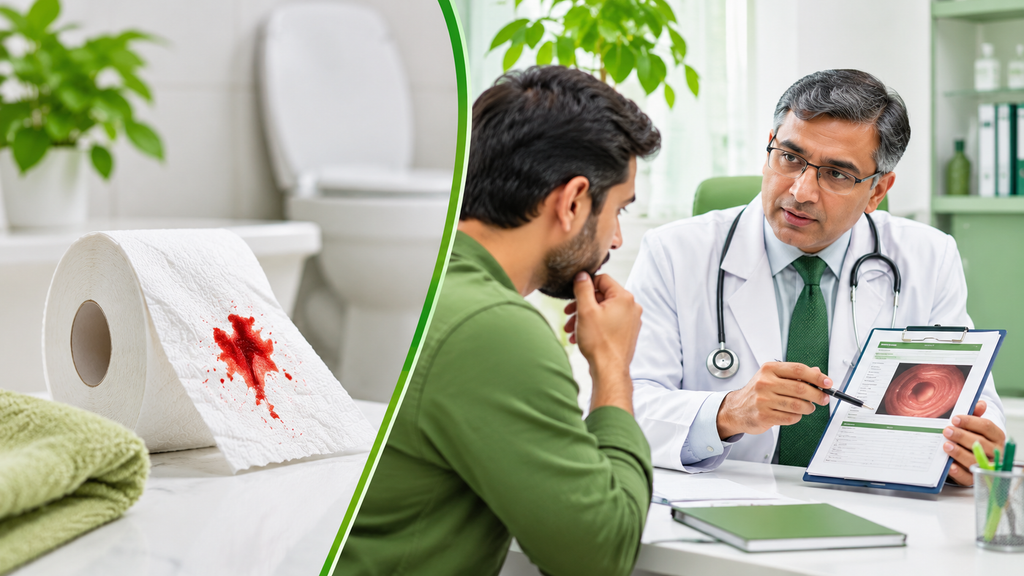
Any new bleeding from the back passage deserves examination by specialists. Book a consultation with specialists. Dr. Sukhdeep Singh Jawahar deals with the problem of blood spots on toilet paper or mixed with stool because they are linked to straining or constipation. Without any delay, consult the gastroenterology department at Sanjoiwani Healthcare Centre, where Ayurvedic treatment is given to you for your healthcare problems, and you also understand, by consulting with the doctor, which problem needs medical care on an emergency basis: piles vs serious rectal bleeding. To manage these problems properly, prescribed Ayurvedic medicines are advised to you by the specialists.
FAQ’S
What does bleeding from piles look like?
The bleeding from piles looks like dark red blood spots on toilet paper or in the toilet bowl during or after a bowel movement.
What signs of rectal bleeding mean something more serious?
The signs of rectal bleeding that mean something more serious include dark-coloured blood, unexpected weight loss, weakness and abdominal pain.
Is it possible that piles can turn into cancer?
No, piles do not become cancerous because the symptoms of piles can be managed by consulting with specialists.
What are the causes of rectal bleeding?
The causes of rectal bleeding include anal fissure, inflammatory bowel disease and diverticular disease.
What are early signs to consult with a doctor?
Early signs to consult a doctor include continuous and heavy bleeding, blood clots, severe abdominal pain and feeling weak